Standardize the Work. Actually Defend
Turn undocumented habits into a defensible operating system for due diligence, review, delivery, and escalation when the IRS, a client, or your own staff tests the file.
Need a WISP first? Start with the WISP product line
Choose the lane closest to your risk
The Exposure
Most tax firms do not fail because they lack effort. They fail because they cannot prove the standard they claim to follow.
Scattered notes, verbal habits, and untracked review steps create preventable exposure long before an IRS notice, office visit, or staff mistake makes it visible.
WISP is not optional. Tax preparers are required to maintain a Written Information Security Plan documenting how they protect taxpayer data. Without one, your practice is exposed before tax season even begins.
Missing Signatures
Inconsistent e-file signature sequencing and documentation gaps.
Weak Due Diligence
Insufficient evidence for EITC, CTC, and other critical tax credits.
Staff Inconsistency
Seasonal staff operating without structured review or standard procedures.
No Written Security Plan
A Written Information Security Plan is required for tax practices. Most firms don't have one.
No Audit Trail
Lack of a structured audit log to document supervisory oversight.
Informal Workflows
Procedures living in scattered notes instead of a professional operating system.
See the Difference
Show the Product, Not Just the Promise
Auditable.tax turns scattered habits into structured, reviewable records. These are the kinds of worksheets, logs, and SOP artifacts buyers are actually getting.
Due Diligence Worksheet
Before
"Client verified HOH."
With Auditable.tax
Questions asked, records reviewed, preparer notes, and supervisory review trail — all documented in a structured worksheet.
Review Checklist
Before
"Checked by reviewer."
With Auditable.tax
Named reviewer, date, specific items checked, issues flagged, resolution documented, sign-off recorded.
WISP Section
Before
"We keep data safe."
With Auditable.tax
Named security officer, data inventory, access controls, incident response procedures, employee training log, annual review date.
Staff Onboarding
Before
"Showed them the software."
With Auditable.tax
Training checklist, SOP acknowledgment, review standards, escalation contacts, and sign-off — all in the onboarding section.
What the system actually looks like
Preview the structure buyers care about
Review trail
Due-Diligence Worksheet
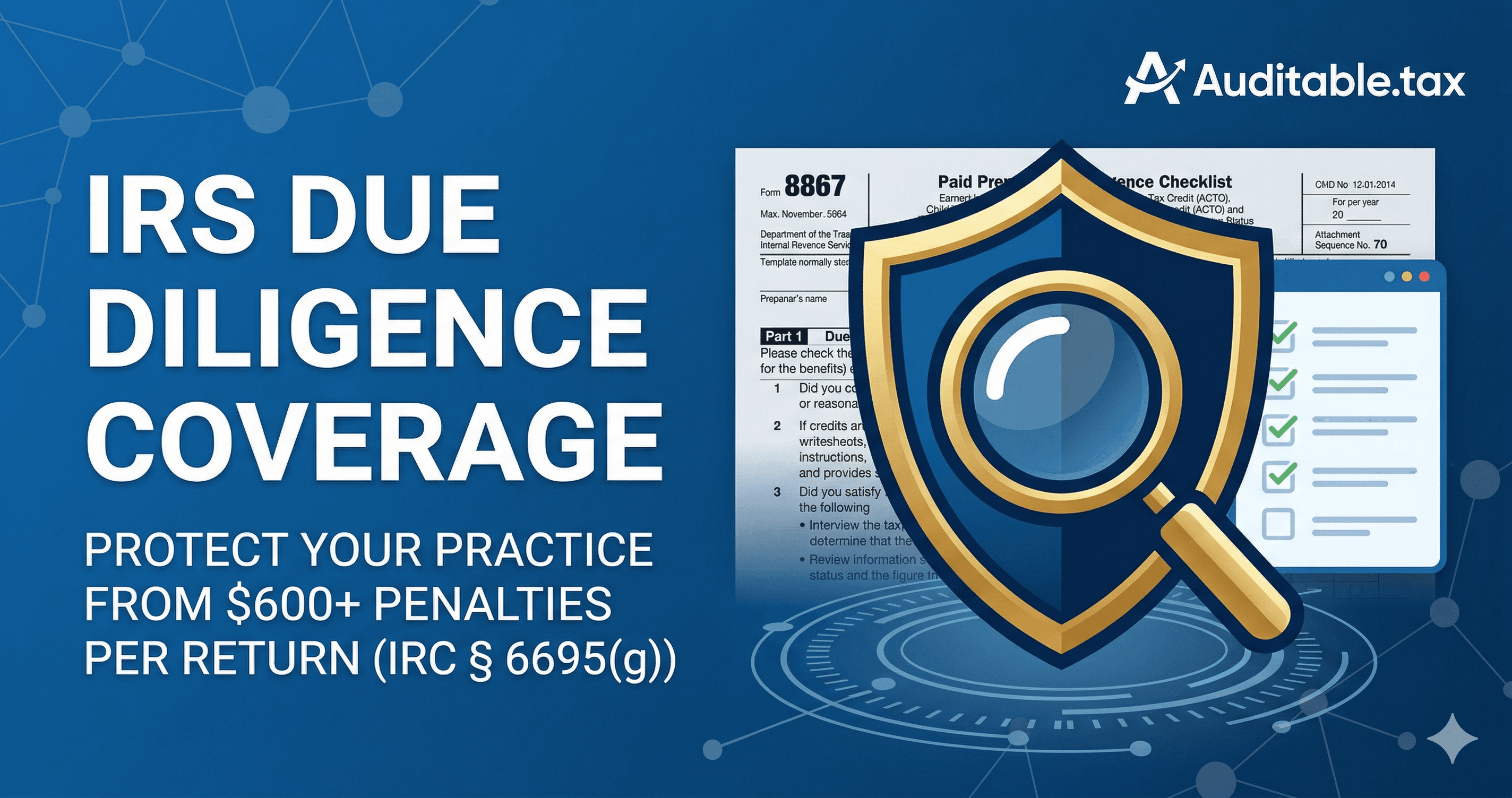
Real client facts, questions asked, records reviewed, and sign-off structure instead of one-line notes.
Security lane
WISP Package Spread
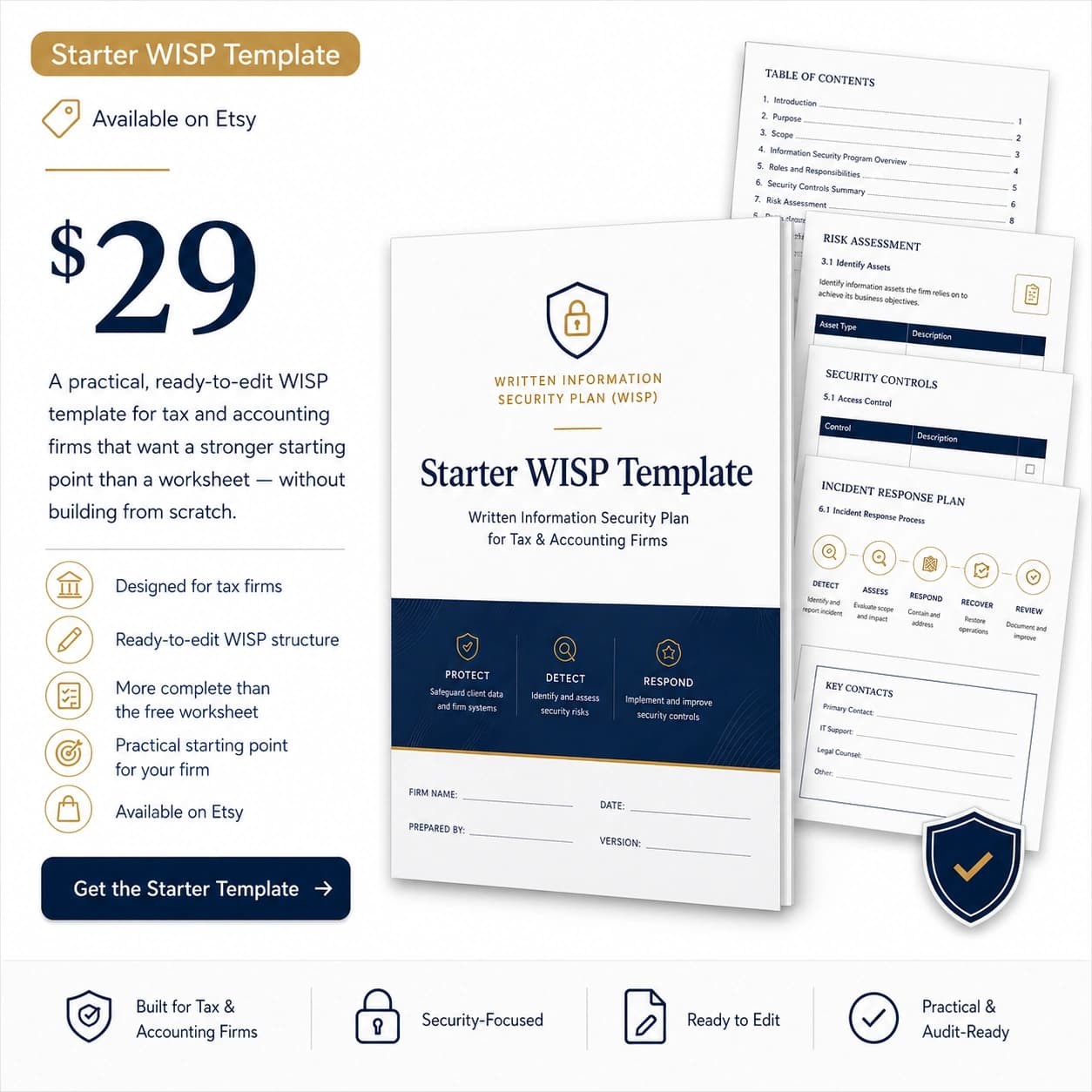
Named security roles, risk assessment structure, incident response, and annual review controls in one lane.
Operating system
Workflow and Review Stack
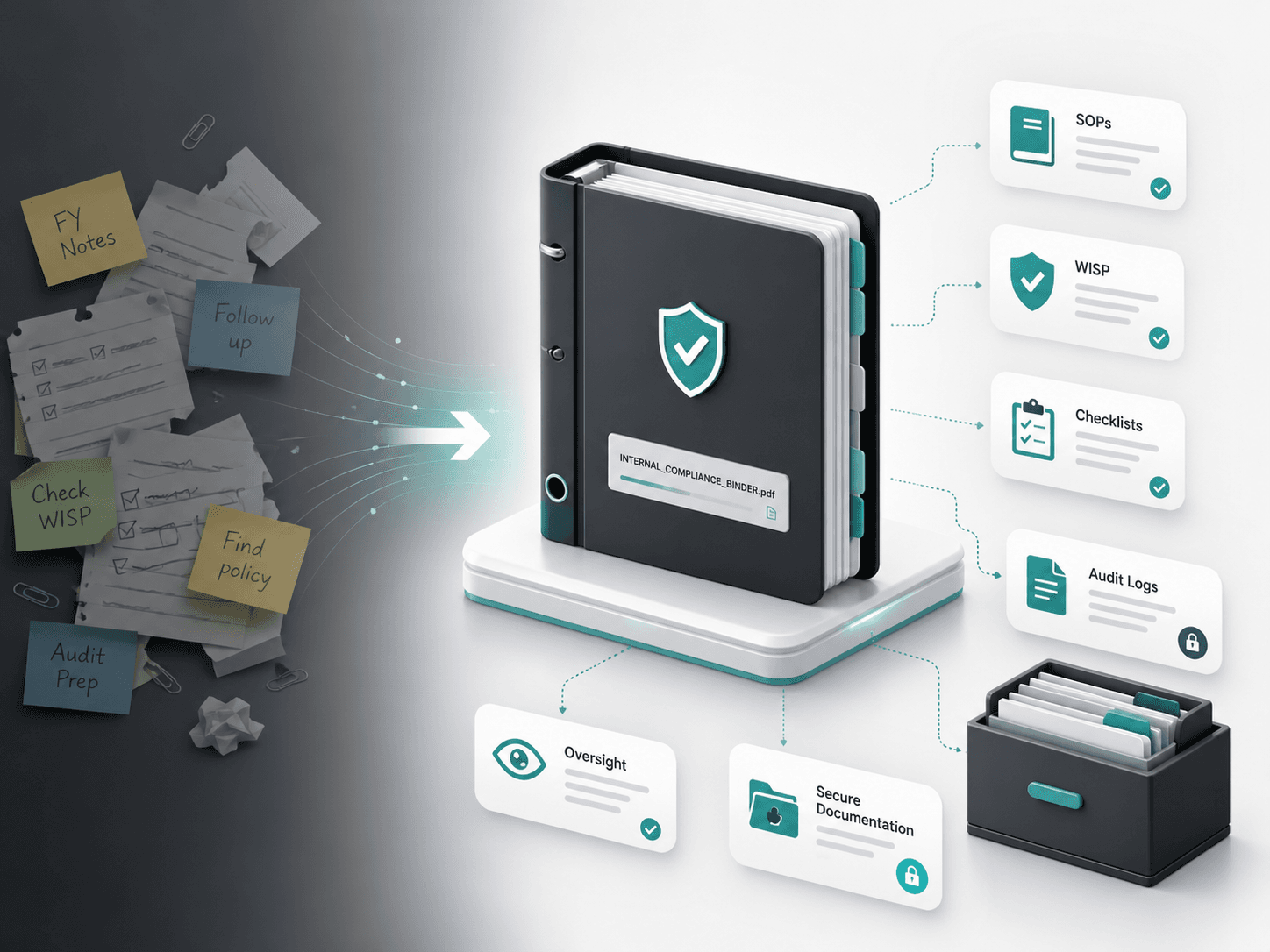
A connected set of checklists, worksheets, and review controls built to hold together across the file.
Product Packages
Choose the Right Lane for the Risk You Need to Control
Start with the core workflow that breaks first in your firm, then move into security, planning, response, or specialty expansion only when the work actually changes.
Starter
Basic compliance documentation and filing discipline for newer practices.
Core 1040 guardrails, intake flow, due-diligence prompts, filing checklist, and a simple start-here system.
Solo
Full solo-preparer operating system for recurring 1040 work and built-in 1120S coverage.
1040 workflow depth, full 1120S S-corp coverage, notices, basic transcript checks, and operating rhythm.
Agency
Multi-staff firms that need governance, QC, handoffs, and enforcement across a team.
Multi-seat coordination, review structure, handoffs, QC, onboarding, and practice management boundaries
WISP
Written Information Security Plan — from free worksheet to fully personalized.
Free worksheet, starter template, DIY kit with fillable PDFs, or premium delivery
Entity Editions
Partnership (1065), C-corp (1120), nonprofit (990), estate (1041). S-corp (1120S) is included in Solo.
Entity-specific technical base, basis/allocation/distribution coverage, audit-response support, with lower expansion pricing for Solo customers
Tax Planning
Planning memos, projections, and year-round implementation follow-through.
Planning cycle, memo templates, projections, scenario packets, implementation review
EA
Enrolled agents handling due diligence, notices, transcripts, and closeout.
Weekly operating cycle, notice triage, transcript-to-action, escalation logic
Representation
Audit-response support, collections, appeals, and formal IRS-contact escalation.
Audit-response support, collections control, appeals workflow, POA discipline
Build the Operating Layer Your Firm Is Missing
Start with the workflow that is currently weakest: WISP, intake, due diligence, supervisory review, entity control, or IRS-response handling.
Need help choosing?
Start with the lane closest to the current risk in your firm. `Starter` is the on-ramp, `Solo` is the flagship, `Agency` is the governance layer, and `WISP` stays separate as the written security-plan lane.